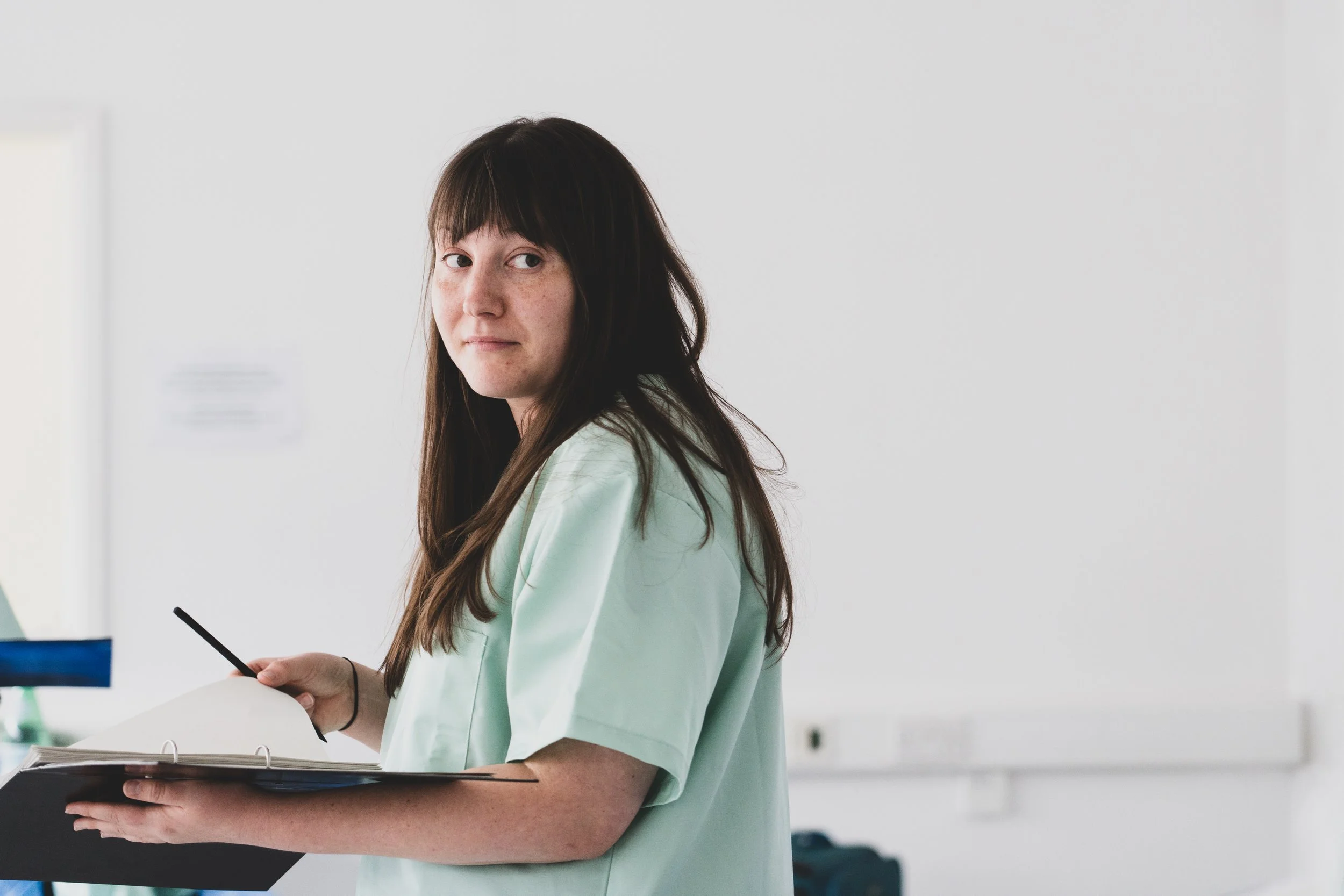
She is Breaking
She is breaking
We’re separated by a screen, by a postcode, and by any knowledge of each other’s lives.
We’re separated by a screen, by a postcode and by any knowledge of either one’s life…
She is in her kitchen; the heart of the home; the place that gives nourishment. The place where I imagine she stirs, kneads, folds, or dusts food with love and care. Where she makes herself a packed lunch and smothers the worries of the last shift with extra mayonnaise or chutney.
I’m sat at my laptop in my home office, being swallowed by IKEA oak veneer furniture, overwhelmed with books, ambition and self doubt. I’m imbued with nervous energy; berating my self indulgence to do this research, and finding it difficult to shake of the desire for everything to be perfect.
I ask her a question and suddenly she becomes an upturned drawer from her seemingly ordered kitchen, emptying itself of stuff. She reaches into the pile and pulls out several urinary tract infections, dehydration, headaches and fatigue ensnared in a Tesco bag of fear rather than bag for life.
A bag of fear that she would waste the very little personal protective equipment that the hospital had in the first wave….
She is breaking.
She is the crack in her voice that I’ve become trapped in.
She is the exposed tear drop that appears to be plugging up her dam of un-cried grief. It mixes with the ink of her mascara to paint shapes of pain from her eyelashes to her cheeks.
She is the tight grip on her tissue that quickly wipes away the mess and the disarray, with the efficiency she would apply to neatly coiling up the wires of a ventilator.
She is breaking.
And I’m watching and listening and trying to embody in my whole being that I care; that if I could, I would put my arm around her or grasp her hand and look intently into her eyes to let her know that I hear her.
She is being heard. I hear her.
I realise that I am already marked by this research- certainly not cracked or broken but scratched… altered.
Stacey Moon-Tracy, April 2022
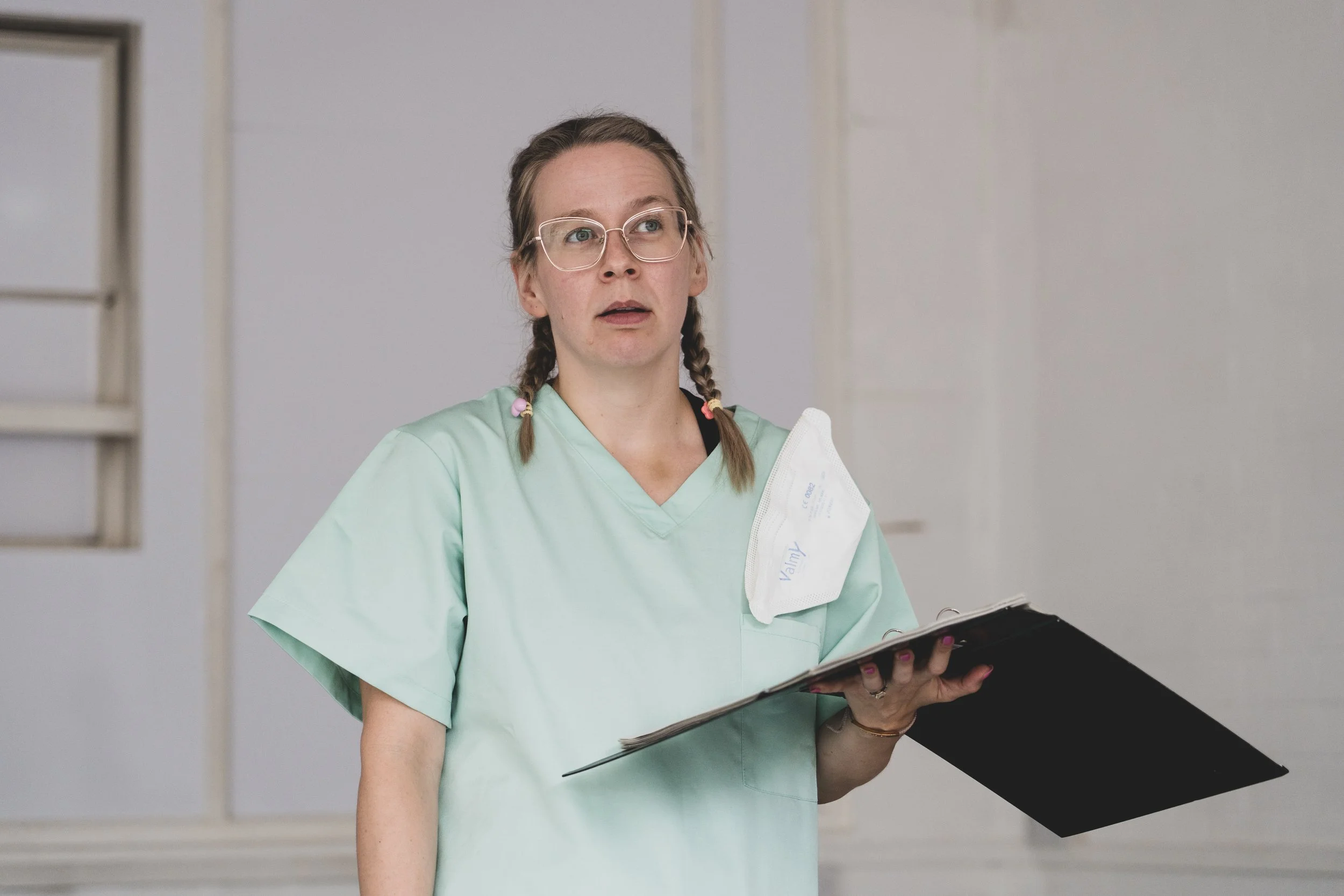
No Shame in Breaking
The voice of the ICU nurse is waning- she is exhausted, but she forces a smile as she tells me that if COVID happened now then she wouldn’t hesitate to go through it all again.
The voice of the ICU nurse is waning- she is exhausted, but she forces a smile as she tells me that if COVID happened now then she wouldn’t hesitate to go through it all again.
The PPE would make her want to scream and she would feel overwhelming anxiety, but patients would need her, so she would step into the unit and let her fears disappear for that shift.
She tells me that her pain will last forever, but she hopes to get to a point where she doesn’t feel broken but instead maybe cracked.
She leaves me feeling in awe as she isn’t afraid of imperfection because she knows that perfection doesn’t exist.
She has been forced to live and work an impossibly imperfect existence for the past two years and she is hurt and continues to hurt and she is not protecting me from that because it is important to be seen and to be heard as you really are, rather than an impression of you that you think will earn people’s approval.
She sees, hears, smells, tastes and touches uncontrollable and messy emotions of anguish, intense pain, fear, love, ecstasy and joy most shifts. She is a close acquaintance of death and knows the importance of life and living unshielded by fear.
She teaches me that there is no shame of breaking sometimes.
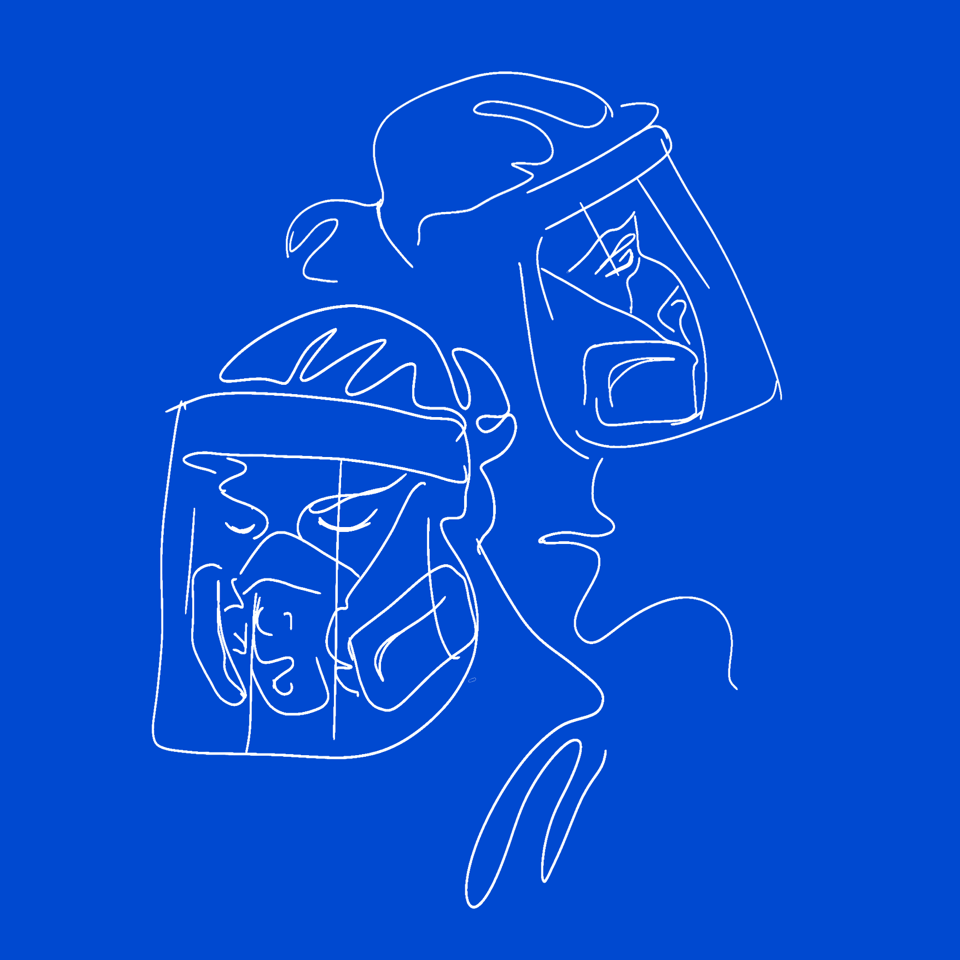
Voices of Care- Thesis Abstract
Voices of Care: a compassionate approach to playwriting as arts based research to explore, interpret and disseminate narratives of women who were Nurses working in Intensive Care Units during the COVID-19 pandemic.
Thesis abstract, by Dr Stacey Moon-Tracy
This research builds on previous scholarship (Barker, 2018; Cole & Knowles, 2018; Harris and Sinclair, 2014) that demonstrates how playwriting can serve both as a method of analysis and as a means of presenting and disseminating research findings. Here, the playwriting process seeks to engage research participants compassionately, resulting in storytelling that presents women critical care nurses’ lived experiences during the COVID-19 pandemic.
The pandemic placed immense strain on nurses, intensifying challenges to their mental health and wellbeing (Anzaldua & Halpern, 2021; Pappa et al., 2020). While existing studies address the general impact on healthcare workers, the distinct experiences of women ICU nurses remain underexplored and under-represented. This research recognises the importance of understanding how gender-specific and systemic factors influence nurses' professional identities, particularly in crisis contexts.
Through the playscript Critical Care, the emotional, relational, and psychological impact of the pandemic on nurses’ identity and wellbeing is explored and shared. A compassionate playwriting approach was undertaken and developed over a three year period that integrates social science and arts-based methods to inform and develop the playscript as a form of research and means of sharing the nurses’ stories.
Semi-structured interviews with eight ICU nurses provided a contextual understanding. The interviews were followed by three creative writing workshops inviting five nurses to share sensory and imaginative responses to their experiences to directly guide and inform the script development.
The interviews and workshops provided an in-depth understanding of the lived experience and centred the nurses’ voices, grounding the creation of the Critical Care playscript. The playscript was developed further through collaboration with five nurses, four actors, a director, and a composer, using improvisation, movement, and performance work over a two week intensive development period. The script was then further tested and shaped to ensure emotional authenticity through feedback from a wider nursing audience collected at an online (30 people) and in person (60 people) event hosted by the British Association of Critical Care Nurses and a rehearsed reading to a public audience of 90 people at Nonsuch Studios in Nottingham.
At the heart of this research is the development of the CARE Framework (Compassionate Arts Research of the lived Experience), which has been developed through practice and provides an approach to playwriting about difficult lived experiences that creates a space of compassion, where storytelling serves as both expression and reflection. Feedback from participants and audiences highlights the therapeutic potential of this approach, with nurses expressing feelings of validation and connection through their contributions to the playwriting process and seeing their experiences authentically represented.
This research makes three key contributions: (1) a model illustrating ICU nurses’ experiences and effect to professional identity during the pandemic, (2) the Critical Care playscript as a means of documenting and sharing their stories with a wider audience, and (3) the CARE Framework, offering a structured approach to compassionate playwriting for research.
By amplifying the narratives of women ICU nurses, this research demonstrates the potential of playwriting as a powerful tool that fosters empathy and understanding. It illustrates how, through compassionate playwriting, the playwright can engage deeply with participants, explore complex human experiences, and share them in ways that resonate with participants and informs and generates understanding amongst wider audiences.
If you would like to read or discuss this thesis- please contact Stacey: staceymariemoon@hotmail.co.uk/ 07903954474
You are making me feel sad
I feel like a fraud as I sit here thinking about how I can depict such anguish and experience through drama, when all I can do is sympathise.
I feel like a fraud as I sit here thinking about how I can depict such anguish and experience through drama, when all I can do is sympathise. I can understand fear and pain- I felt such distress when my son at age three was rushed into surgery with a ruptured appendix and spent the next ten days in hospital fighting the infection. I was so distraught days after his surgery that a nurse took me to one side and told me that I needed to stop crying because I was making her feel sad. I remember it was said with a smile and so I didn’t take offence. I knew that I needed to move past the shock of confronting the possibility that he could have died, but I didn’t really appreciate why it mattered to her until now. Every day she worked with sick children and like ICU spent a lot of time in the company of their family. She had to find a way to protect herself from our distress so that it didn’t consume her. Just hearing the stories of the nurses that I have interviewed obviously moved me but more than that, I found myself thinking of them and worrying for them. To spend long days with patients who are at their most vulnerable and in most need; who rely on you to live- to be needed so much by someone and their family, how can you not form some attachment to them? How can you not grieve their pain? How can you not mourn their passing? I know what it is to feel fear, to feel deep gut wrenching pain and I know what it is to lose someone and something of yourself but not on the same scale, not over a sustained period, not to the point where I could even consider taking my own life.
I will never truly understand the short term and long term effects of the pandemic on these women, who protected people like me, who have given so much of themselves and sacrificed so much of what they could have experienced. I sit in my living room with my youngest son who has now tested positive for COVID, facing another week of being trapped in my home. I look at the pile of dried mud that my eldest son has trodden out of his walking boots before venturing out of the door to forest school and rather than feeling frustrated I am soothed. I may feel at times like I want to tear the house down or walk away from the duty it places on me; but I appreciate it. I appreciate each crack that becomes a crevice to store another happy memory to add to an already abundant store of fun, of love, and of happiness. I do not share in the sorrow and pain that those nurses took back into their homes but I care about it and listening to their stories and finding a way to share them is my responsibility; it is my privilege and it will be my gesture of care to them.